Winning Competition Entries: The Power of Fewer Images

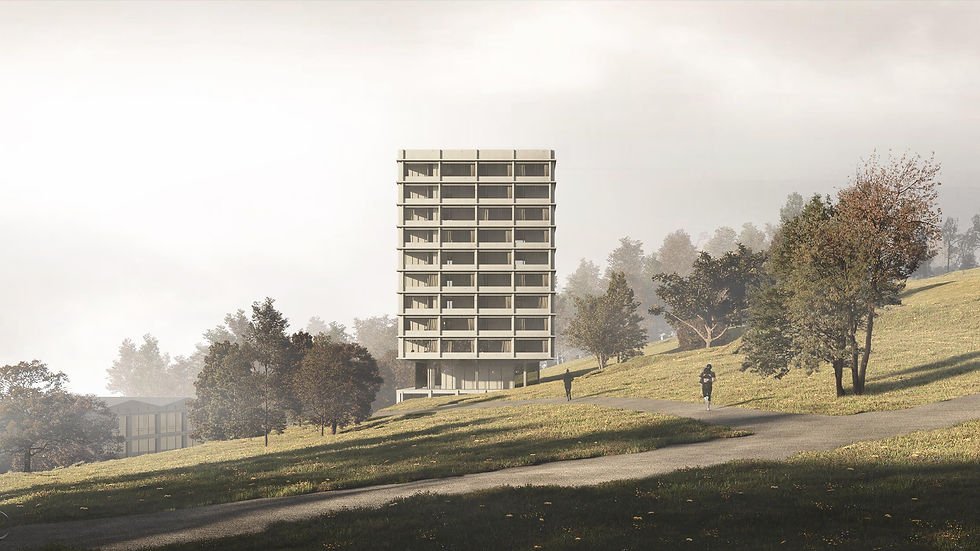
You're preparing your competition entry. The deadline is close, the budget is tight, and someone on the team is pushing to add more images. "Three isn't enough. We need at least six." This instinct is understandable. However, data suggests otherwise.
We analyzed 350 award-winning competition boards from publications like Espazium, ArchDaily, Dezeen, and Divisare. Winning entries with high-quality renderings used an average of just 2.97 images per panel. Not six. Not nine. Fewer than three.
Here's why that number matters — and how to choose the images that do the real work.
What the Data Shows
Of the 350 winning entries we studied:
77% included photorealistic or high-quality renderings
18% used illustrations or conceptual visuals
Only 4% had no 3D content at all
Quality visualization is now effectively mandatory at a competitive level. But the finding that changes how you should think about your board isn't the 77% — it's the 2.97. Winners don't fill their boards. They choose.
Why More Images Usually Weaken Your Board

In large open competitions, juries review hundreds — sometimes thousands — of entries in a single session. The Guggenheim Helsinki competition drew over 1,700 submissions. According to Architizer, the Pompidou Centre attracted 681. With that volume, a jury member has at best 30 seconds with your boards before deciding whether your entry goes on the shortlist.
ArchiCGI confirms this: panels in large competitions typically spend no more than 30 seconds per submission on an initial pass.
When you fill a board with six or eight images, none of them gets the space it needs to land. The eye doesn't know where to look. The concept gets diluted. A single image that stops the room does more work than eight that compete with each other for attention.
What Juries Actually Notice First
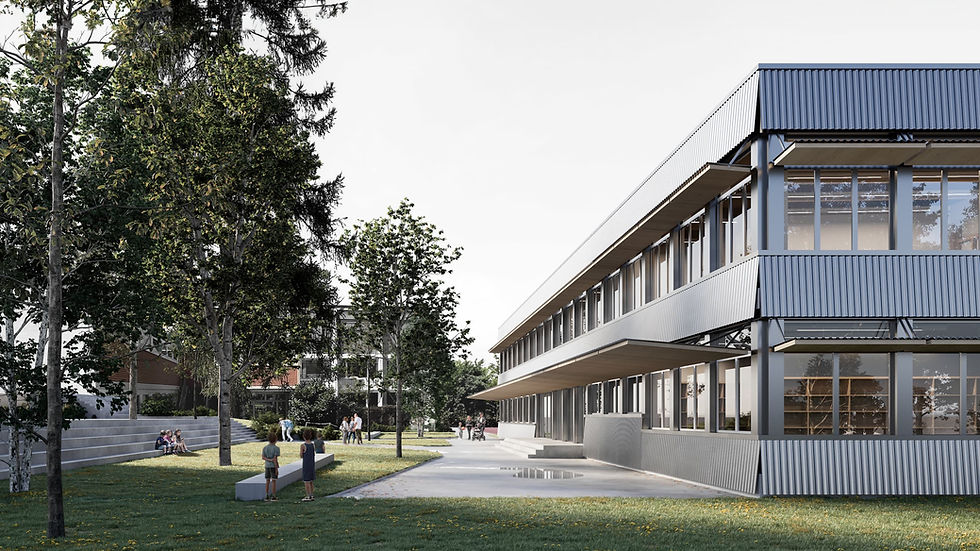
Juries respond to images that make them feel something before they start reading. The AIA identifies clear visual communication as the most critical factor in how jury members evaluate competition entries. RIBA research similarly confirms that presentation clarity significantly influences evaluations at all levels.
In practice, this means three things:
One Dominant Image. Large enough that a juror standing three meters away, surrounded by dozens of other entries, can immediately grasp the concept. If it requires close reading, it's not doing its job.
A Story, Not a Catalogue. The renders that land show life inside the space, not just the space itself. A school entry that shows students in natural light at midday communicates something a clean exterior shot never can. The jury sees a reason the building should exist.

Perspective That Serves the Concept. Bird's-eye for urban projects where the relationship to context is the argument. Human-level when the experience of the space is the argument. Choosing the wrong perspective is one of the most common ways a strong design gets lost in presentation.
How Many Renders, by Competition Type
Open International (500+ entries): 2–3 renders. One hero, one experiential interior, and optionally one contextual view if the site relationship is central. Every additional image divides the visual weight of the hero.
Restricted (10–30 invited firms): 3–4 renders. The jury spends more time per entry. A spatial sequence — from entrance through to the key programmatic space — works well here.
Public Tender: 2–3 renders. Work within the required format, but don't fill the allowed space just because you can. A tight, well-chosen set conveys confidence in the design.

Local or Regional: 1–3 renders. Contextual clarity matters more than visual spectacle. One strong exterior in context and one interior often outperforms a polished set that feels disconnected from place.
How to Choose the Views That Do the Real Work

Start with the Thesis. What is the single most important argument your project makes? Your hero image should make that argument without any text required.
Think in Pairs. One exterior, one interior. The exterior places the building in its world; the interior shows what it means to be inside it. Together they tell a complete story. Everything else is supporting material.
Test the 30-Second Rule. Ask someone who hasn't worked on the project to look at your board for 30 seconds and describe what they saw. If they can't articulate the core concept, the images aren't doing enough work — regardless of their technical quality.
Resist the Safety Net Impulse. Adding more images is usually a response to uncertainty about whether any single image is strong enough. The better response is to invest more in making one image genuinely compelling. One render that stops the jury is worth more than five that are merely competent.
We saw this firsthand with a client preparing a school competition entry. Their initial brief called for nine images. When the budget didn't stretch, they chose more images from a cheaper provider instead of fewer, better ones. The boards were full. They didn't land.
💡 If you're preparing a competition entry and want to talk through how to get the most from your visualization budget, we'd be glad to help. The conversation usually starts with one question: what does this project need to say — and what's the single image that says it?

FAQs
How many renders do winning competition entries typically use?
Based on our analysis of 350 award-winning boards, entries with high-quality photorealistic renders averaged 2.97 images per panel — roughly 2–3 renders per board.
Is it better to have more renders or higher-quality renders?
Higher quality, almost always. One image that stops the jury does more work than six that compete with each other for attention.
Do Swiss and European competitions have different expectations?
Swiss Wettbewerbe and Central European competitions generally reward conceptual clarity and contextual sensitivity over visual spectacle. A strong exterior in context and one precise interior will often outperform a polished lifestyle render set. The standard is high, but the emphasis is on the idea.
Can you win without photorealistic renders?
Our study found 18% of winning entries used illustrations or conceptual visuals, and 4% had no 3D content. But in most competitive open submissions, photorealistic renders are now the standard.
Related reading:


Comments